


- This event has passed.
GI-TOC’s Meetings on Transnational Crime
May 25, 2025 All day
Putrajaya, 21–25 April 2025 – Aizat Shamsuddin, Founder and Director of INITIATE.MY, co-facilitated a series of high-level stakeholder meetings on foreign criminality in partnership with the Global Initiative Against Transnational Organised Crime (GI-TOC). GI-TOC is an international organisation that strengthens responses to organised crime through research, policy dialogue, and cross-sector engagement.
The meetings convened law enforcement agencies, government officials, legal practitioners, and civil society actors to examine the rising threat of foreign criminal actors operating transnational organised crime networks in Malaysia. Discussions focused on the strategies these actors use—including exploiting governance gaps—and evaluated the effectiveness of current countermeasures.
According to GI-TOC’s 2023 Organised Crime Index, Malaysia’s criminality score rose to 6.23, marking a 0.30-point increase from 2021. This signals a worsening organised crime environment, with increased activity across various illicit markets. Notably, the score for foreign criminal actors rose to 7.00—a 0.50-point increase—indicating their growing presence and influence.
Malaysia’s Organised Crime Rankings (2023):
- 38th of 193 countries globally
- 16th of 46 countries in Asia
- 6th of 11 countries in Southeast Asia
While Malaysia’s resilience score also increased slightly to 5.92 (a 0.08-point improvement from 2021), this remains insufficient to offset the expanding threats posed by organised crime.
Resilience Rankings:
- 40th of 193 countries globally
- 5th of 46 countries in Asia
- 2nd of 11 countries in Southeast Asia
These figures underscore a growing vulnerability to foreign criminal networks, despite moderate institutional resilience. There is an urgent need for stronger cross-border cooperation and preventive policy interventions to dismantle these illicit networks and address systemic enablers.
INITIATE.MY’s counterterrorism work intersects with issues of foreign criminality and organised crime—especially where transnational terrorist groups like Jemaah Islamiyah (JI) and Daesh collaborate with organised crime syndicates. These networks are involved in arms trafficking, financial concealment, and the trafficking of women and children, often operating across Southeast Asia and beyond.
As ASEAN Chair, Malaysia holds a critical opportunity to lead regional responses against these threats. In particular, it should prioritise emerging challenges involving cyberspace exploitation and the misuse of AI. With the Senior Officials Meeting on Transnational Crime (SOMTC) set for June 2025, Malaysia should push for regional action particularly on cyberscams and forced labour plaguing the region, and promote more agile and coordinated cooperation across Southeast Asia.
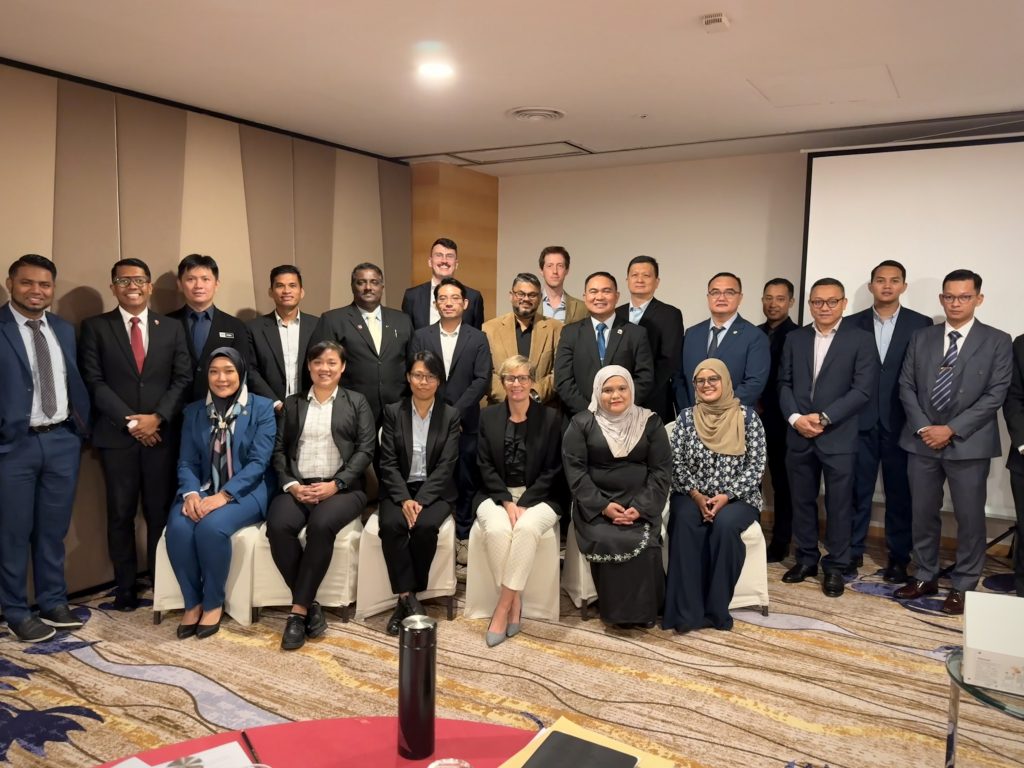
Stakeholders from law enforcement, government, civil society, and legal sectors convened in Putrajaya to examine foreign criminality in Malaysia.