


- This event has passed.
DRAPAC Panel Discussion: Tech-Facilitated Abuse and Its Threats to Democracy and Human Security in Southeast Asia
August 26, 2025 @ 8:00 am – 5:00 pm
Kuala Lumpur, 26 August 2025 – The panel discussion “Tech-Facilitated Abuse and Its Threats to Democracy and Human Security in Southeast Asia” convened regional experts, activists, and researchers from Myanmar, the Philippines, Indonesia and Malaysia to examine how technology is increasingly abused by bad actors to threaten democracy and human security in the region at the Digital Rights Assembly Asia Pacific (DRAPAC) 2025.
In Myanmar:
1. Internet shutdowns have become institutionalised since the 2021 coup, shifting from isolated incidents to a sustained tool of control.
2. Increasing surveillance tactics, including SIM card hijacking, blocked OTP (one-time password) verifications, and arbitrary denial of internet access.
3. These measures are now amplified by AI-driven tools, such as keyword recognition and the integration of facial recognition with CCTV systems.
4. Such practices have created a pervasive climate of fear, limiting digital freedoms and everyday communication.
Civil society actors are particularly targeted, often subjected to doxxing, arrest, and criminalisation — caught between intensified state repression and the threat of rising cybercrime.
In the Philippines:
1. Internet usage in the country ranks among the highest globally, with community Wi-Fi acting as both a vital service and a platform for grassroots advocacy.
2. However, this digital dependency has also increased vulnerability to state overreach, including; Cyber libel prosecutions; Expansive surveillance programmes; Enforcement of the Anti-Terror Law; and, Mandatory SIM card registration
3. Concerns were raised over the sharing of private telecom data with foreign entities, which further undermines public trust and accountability.
4. Despite these threats, grassroots efforts continue to foster resilience through cybersecurity workshops and digital rights awareness initiatives.
In Indonesia:
1. Disinformation has been a persistent challenge, especially during and after the 2014 and 2019 elections.
2. Despite the presence of fact-checking networks, deepfakes and coordinated influence operations were reported to have undermined public trust in democratic institutions between 2014 and 2024.
3. Proposed countermeasures included judicial reviews of problematic laws, strengthening investigative journalism, and expanding cross-sector collaboration on fact-checking to build long-term public resilience.
In Malaysia:
1. Online spaces across the region have become increasingly polarised, particularly during election cycles, with spikes in hate speech and inflammatory rhetoric.
2. Political actors, influencers, pseudo-news outlets, and bot networks were noted as key amplifiers of divisive narratives.
3. AI-driven recommendation algorithms worsen these dynamics by promoting toxic content under engagement-based profit models.
4. Civil society organisations and vulnerable groups—including minorities, human rights defenders, and public servants—are frequent targets of coordinated online attacks, ranging from cyber harassment to disinformation campaigns.
The session concluded with a clear message: governments in the region are increasingly using digital tools for surveillance, intimidation, and control. However, resistance is growing through legal action, investigative journalism, advocacy, and grassroots efforts. Safeguarding digital rights and civic space in Southeast Asia will require stronger regional solidarity and a bold reimagining of a digital ecosystem grounded in human rights.
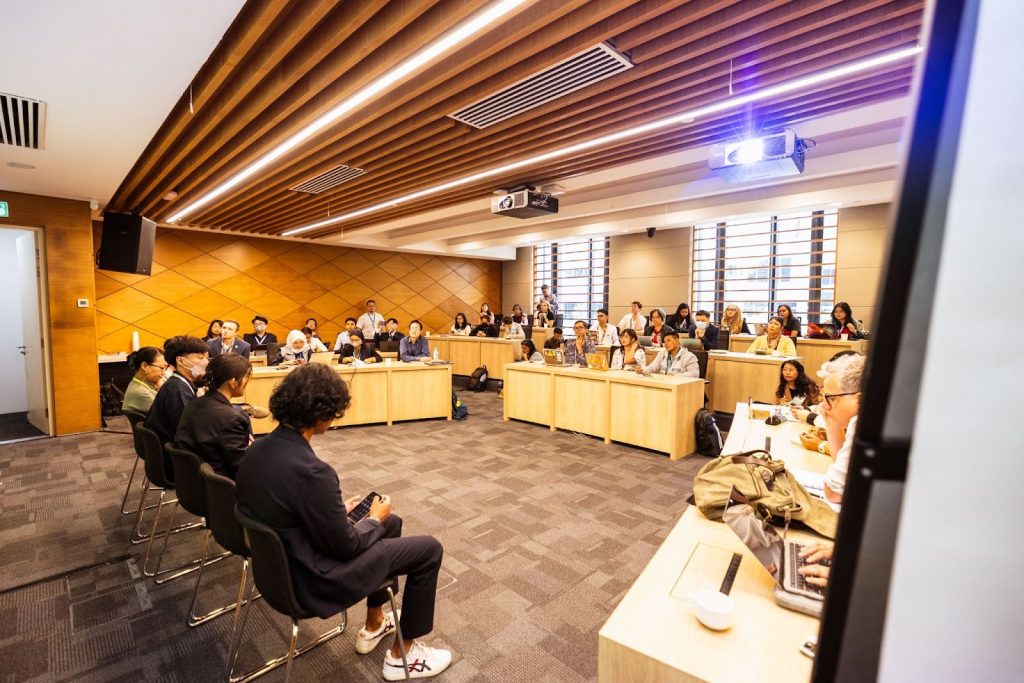
The panel discussion examined how surveillance, disinformation, and online harassment undermine civic space—and how regional collaboration can strengthen democratic resilience.