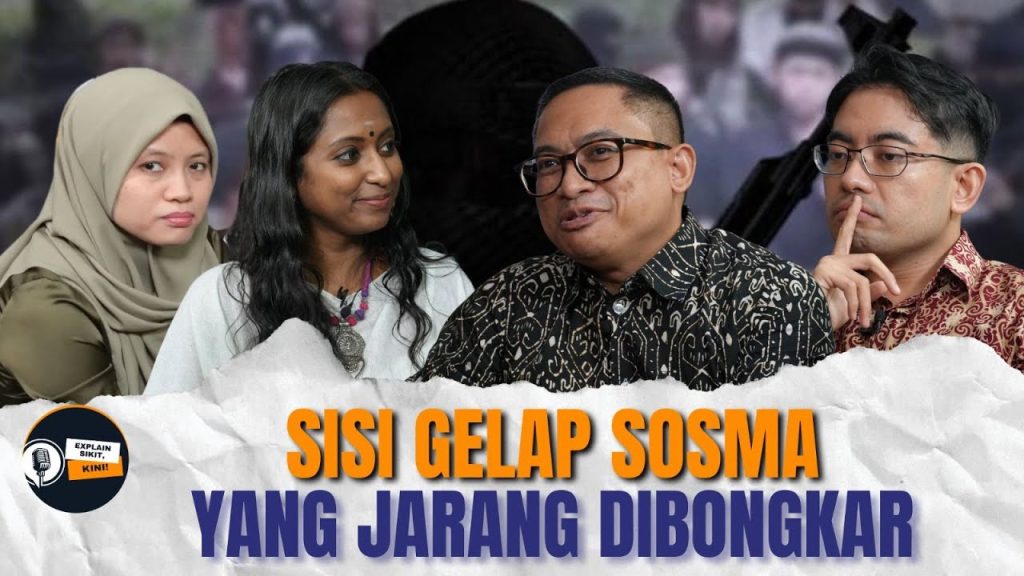

Kuala Lumpur, 29 October 2025 – INITIATE.MY participated in a podcast episode hosted by Malaysiakini examining the Security Offences (Special Measures) Act (SOSMA), where civil society practitioners, legal observers, and community advocates came together to critically assess the law’s implications for human rights, national security, and public trust in Malaysia.
The podcast featured panellists including Dr. Mukhriz Mat Idrus, Senior Lecturer at the School of Law, Universiti Utara Malaysia (UUM), Yoges Verasuntharam, Lawyer of Advocacy and Litigation, Firdaus Husni, Board of Directors at the Malaysian Council for Human Rights (MCCHR), and Aizat Shamsuddin, Executive Director of INITIATE.MY.
You can find the full podcast here.
The podcast examined several weaknesses of the Security Offences (Special Measures) Act (SOSMA). Following the repeal of the highly unpopular Internal Security Act (ISA) in 2012, there was renewed hope within the advocacy community for more just and transparent procedures in addressing national security concerns. Since then, public debate has remained divided over whether SOSMA strengthens national security or undermines fundamental rights.
The key takeaways from the podcast are:
- Broad scope of security offences. The wide interpretation of “security offences” under SOSMA has raised concerns about its potential application beyond genuine national security threats, including cases involving activists and civil society actors, which may weaken public confidence in the law’s legitimacy.
- Limited transparency during arrest. Participants noted instances where individuals were detained without clear communication of the grounds or reasonable suspicion, creating challenges for detainees and their legal counsel in preparing an adequate defence.
- Socioeconomic consequences of detention. Even short periods of detention can lead to loss of employment, financial strain on families, and long-term social stigma for detainees after release.
- Inconsistent bail practices. Courts frequently deny bail in SOSMA cases, and exemptions intended for vulnerable groups such as children, women, and the elderly appear to be applied inconsistently.
- Absence of a sunset clause. The government’s earlier commitment to introduce a sunset clause has yet to be implemented, limiting opportunities for periodic parliamentary review of the law’s continued necessity and proportionality.
- Polarised policy discourse. Critics of SOSMA are sometimes characterised as being “anti-security,” which can constrain constructive policy debate and hinder efforts to improve enforcement frameworks.
- Alternative legal and preventive approaches. Existing penal provisions already address offences related to cyber threats and digital radicalisation, while community-centred initiatives such as the Malaysian Action Plan on Preventing and Countering Violent Extremism (MyPCVE) provide preventive mechanisms that complement legal responses.
The podcast concluded by acknowledging a genuine divide within the advocacy community. Some participants argued for the abolition of SOSMA due to concerns over its treatment of youthful or first-time offenders and the potential for political misuse. Others advocated for targeted reforms rather than repeal. Despite these differences, there was broad agreement that national security and human rights should not be mutually exclusive, and that sustainable counter-terrorism policies must be grounded in transparency, proportionality, and public trust.