
 By Dr. Haezreena Begum binti Abdul Hamid, Criminologist and Senior Lecturer at Faculty of Law, Universiti Malaya. She was the head of the evaluation panel for the deradicalisation programme appointed by the Royal Malaysia Police (PDRM), and conducted risk assessments on Malaysian detainees repatriated from Guantanamo Bay. She also appeared on Salam Stage with a story about the importance of ‘second chances’ for former detainees. Please watch it here.
The return and reintegration of former Guantanamo Bay detainees provide an exceptional window into the realities of counterterrorism, deradicalisation, and human vulnerability.
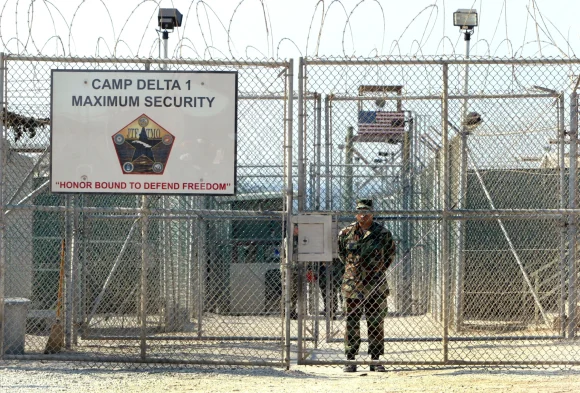
The experience of two Malaysian nationals—referred to here as Mr. M and Mr. K— detained for more than 21 years across the “black sites” of Central Intelligence Agency (CIA) and the Guantanamo detention regime demonstrates not only the profound impact of torture and prolonged imprisonment but also key lessons for improving policy and practice in Counterterrorism (CT) and Preventing and Countering Violent Extremism (PCVE) in Malaysia and beyond.
Their three-week multidisciplinary assessment in December 2024 revealed that contemporary deradicalisation efforts cannot rely on superficial ideological models or unverified “experts.” Instead, it requires deeper interrogation of trauma, lived experience, rights-based practice, and the structural safeguards needed to prevent misrepresentation and coercion.
Key Lessons Learned
First and foremost, trauma is central to deradicalisation.
Trauma fundamentally shapes an individual’s deradicalisation trajectory. Both men endured years of extreme physical and psychological torture such as sleep deprivation, cold immersion, chaining, beatings, sensory assault, prolonged isolation, sexual humiliation, and constant fear followed by nearly two decades of controlled confinement in Guantanamo.
These experiences produced long-term emotional and cognitive consequences including nightmares, hypervigilance, anxiety, and deep-seated triggers that persisted even after repatriation. Such trauma cannot be separated from deradicalisation work.
“Experts without clinical or social science literacy risk misreading trauma responses as “radicalisation indicators,” thereby harming both the individuals and the credibility of the deradicalisation work. Any CT/PCVE experts operating in policy or practice must possess trauma-informed competencies and understand the psychological survival mechanisms that arise in extreme detention environments.”
Second, expertise must be credible, not performative.
There is an urgent need to scrutinise the qualifications and credibility of individuals claiming to be “experts” within the CT/PCVE ecosystem. In one instance, certain actors positioned themselves as government-linked negotiators in discussions concerning a prominent detainee’s potential release—despite holding no formal mandate. This created uncertainty and concern until their lack of official authority was confirmed.
This incident demonstrates the need for stronger accountability, clearer authorisation processes, and more rigorous vetting.
The Guantanamo experience shows that true expertise must be based on verified qualifications, multidisciplinary training, field experience, and institutional oversight—not personal branding, ideological conviction, or proximity to state power.
Without these safeguards, vulnerable individuals risk being misled, retraumatised, or manipulated, and the integrity of national security processes becomes compromised.
Third, deradicalisation is relational, not doctrinal.
Throughout the assessment, both men exhibited warmth, humour, emotional honesty, remorse, and deep gratitude toward the multidisciplinary team. Their willingness to reflect on past mistakes and articulate their desire to rebuild their lives did not emerge from confrontational theological debates or forceful re-education.
Instead, their transformation grew from the panel’s attention to:
- trust-based and empathetic engagement characterised by active listening;
- cultural sensitivity;
- respect for their autonomy, and,
- reassurance about their legal rights.
The panel’s non-judgmental approach gave them space to:
- express remorse
- recognise how they were manipulated in their youth, and,
- share their hopes for family, employment, marriage, and a return to normal life.
Such findings challenge traditional CT/PCVE assumptions that deradicalisation depends on ideological correction. In reality, rapport, dignity, and emotional safety drive lasting behavioural disengagement and reintegration.
Contrary to the belief that exposure to legal language or rights discourse may encourage resistance, the assessment showed the opposite. Legal literacy strengthened their reintegration readiness. Years of engaging their defence counsel had cultivated a strong awareness of constitutional rights, due process, and the implications of plea agreements. This legal awareness helped them accept responsibility, express remorse within an ethical and legal framework, and navigate Malaysia’s justice system upon return with greater confidence.
Legal empowerment, when properly impemented, builds trust in state institutions and reduces the sense of alienation that can otherwise feed radical narratives.
Fourth, multidisciplinary collaboration is essential.
The multidisciplinary nature of the assessment proved to be one of its greatest strengths. By integrating criminology, psychiatry, counselling, sociology, and policing expertise, the team was able to produce a holistic understanding of each man’s psychological state, social background, risk profile, and reintegration needs.
This stands in stark contrast to CT/PCVE approaches that rely heavily on religious scholars, ex-militants, or security personnel alone. The Guantanamo cases demonstrate that addressing radicalisation, trauma, identity, and reintegration cannot be siloed into a single domain.
Instead, robust deradicalisation programmes must adopt a multidisciplinary model grounded in evidence-based practice, human rights, and cross-sector collaboration.
Recommendations
The lessons extracted from these assessments point toward several pressing reforms for the CT/PCVE sector.
1. Expertise must be professionalised through accreditation, training standards, and ethical guidelines that prevent unqualified individuals from intervening in sensitive reintegration processes.
2. Trauma-informed and rights-based frameworks must be embedded across all policy and operational levels to ensure that survivors of extreme detention are not inadvertently retraumatised.
3. Multidisciplinary teams should become the norm, not the exception, in order to address the complex personal, psychological, legal, and social dimensions of reintegration.
4. Strict controls must be implemented to prevent misrepresentation or coercive engagement by outside actors, which risks destabilising individuals who are already navigating fragile reintegration pathways.
5. Reintegration must prioritise rebuilding lives through employment, documentation support, psycho-social care, and community connection rather than focusing narrowly on ideological disengagement. Please read INITIATE.MY’s Policy Brief on Reintegrating Former Security Detainees here.
Ultimately, the experiences of Encik M and Encik K demonstrate that even after decades of wrongful imprisonment, torture, and isolation, individuals can choose transformation when supported by credible experts who recognise their humanity.
These cases challenge the CT/PCVE sector to elevate its standards, interrogate its assumptions, and move away from charisma-based or doctrinally driven models of expertise. A rights-based, trauma-informed, multidisciplinary approach is not simply more ethical, it is far more effective.
In a global landscape where counterterrorism practices are increasingly scrutinised, adopting such an approach is essential for building policies and legal frameworks that are both humane and sustainable.