


By Nurul Hidayah Mohd Noar, Research Officer, Southeast Asia Regional Centre for Counter-Terrorism (SEARCCT)
Today’s online gaming environments function as social ecosystems where young Malaysians connect, build friendships and develop a sense of belonging. Gaming cultivates teamwork, creativity and problem-solving, providing meaningful opportunities for positive engagement and skill-building. However, as with any large digital spaces, gaming environments are also vulnerable to abuse by malicious actors.
Global research highlighted real and evolving risks associated with how these spaces can be exploited. The Extremism and Gaming Research Network (EGRN) identified six ways in which extremist and terrorist actors exploit games and gaming-adjacent platforms, including:
1. Creating new video games and modifications
Extremist actors develop their own video games or modify existing games, commonly known as “mods” to embed ideological content. This enables users to remain within familiar gaming environments while being exposed to curated extremist narratives, symbols, and imagery.
2. Gamification for radicalisation
Gamification refers to the application of game design elements in non-game contexts. Extremists adopt gamified mechanisms such as leader boards and reward badges to incentivise engagement and reinforce participation.
3. Exploiting gaming culture
Given the strong cultural resonance of video games among younger generations, extremist actors appropriate gaming-related symbols, language, and references to increase relatability.
4. Exploiting online games for communication
Extremists utilise in-game communication features such as chat functions and voice channels to engage and interact with users.
5. Exploiting the gaming environment and adjacent platforms
The gaming environment extends beyond gameplay itself to include a broader network of platforms such as Discord and Twitch. Extremists take advantage of these platforms to disseminate content and build communities.
6. Financing and money laundering
Gaming and gaming-adjacent platforms may also be exploited for terrorism financing and money laundering. This can involve the use of virtual currencies, in-game items, or digital marketplaces.
Radicalisation risks on gaming platforms
Social dynamics within digital spaces can enable exploitative narratives and processes of “othering”. In this context, exploitative narratives refer to the strategic use of trust and emotional bonds within online communities to influence attitudes or behaviours, while “othering” involves framing certain individuals or groups as outsiders or threats. Over time, these processes may desensitise individuals to harmful rhetoric and reinforce exclusionary identities, creating an enabling environment in which extremist ideologies can be introduced and amplified. Such conditions can be exploited by malicious actors, as seen in the use of private Discord servers to mobilise participants for the Unite the Right rally in Charlottesville, USA in 2017.
Regional security assessments also reflect similar concerns. Singapore’s Terrorism Threat Assessment Report 2023 documented the case of a 16-year-old who was issued a Restriction Order after joining ISIS-themed servers on Roblox and producing propaganda videos using game footage.
Recent developments in Malaysia further underscore the relevance of these risks. In February 2026, the Royal Malaysia Police detained six teenagers for suspected involvement in terrorist activities. The case illustrates how exposure to extremist ideologies can occur within digital environments frequented by young users, where boundaries between social interaction and ideological influence are increasingly blurred. This underscores the importance of early intervention and a more nuanced understanding of how digital platforms, including gaming environments can intersect with radicalisation processes.
Gaming as a positive tool
Gaming has already been used as a constructive tool for prevention and education. Serious games and game-based initiatives address mis/disinformation, promote democratic values, foster empathy and social inclusion. Within the Preventing and Countering Violent Extremism (PCVE) context, similar approaches support early prevention by building resilience and strengthening social bonds, demonstrating that gaming can be part of the solution.
This potential is increasingly recognised at both national and international levels leveraging gaming and esports to promote teamwork and inclusivity such as, the Ministry of Youth and Sports’ #SamaSamaMenang programme and the UNESCO-MGIEP’s Gaming for Peace initiative.
SEARCCT’s experience in promoting resilience in gaming spaces
The Southeast Asia Regional Centre for Counter-Terrorism (SEARCCT) has long engaged young people through preventive programmes that meet them in familiar spaces, previously using sports and arts as entry points for engagement. With the rapid growth of gaming among young Malaysians, SEARCCT sees a timely opportunity to explore gaming spaces as a relevant medium for PCVE efforts.
Yet this opportunity also brings challenges, particularly the limited familiarity many PCVE practitioners in Malaysia have with online gaming dynamics. Effective prevention particularly in youth-driven digital environments requires subcultural literacy, including a nuanced understanding of gaming norms, language and communication styles. This reinforces the importance of bottom-up approaches that work with community insiders whose lived experience provides credible insight, rather than imposing solutions from the outside.
Acknowledging this need, SEARCCT piloted the Partnering with Online Gaming Groups (POGGER) workshop in 2023. The workshop enabled direct engagement with gaming communities to better understand norms, risks and protective factors within the online gaming spaces. Through facilitated discussions and a mini esports tournament, participants reflected on online harms while co-developing community standards for respectful engagement, reinforcing prevention as a shared responsibility.
For many young Malaysians, guidance on handling conflict and digital risks comes from online peers rather than formal authorities. SEARCCT’s engagement found that streamers often serve as influential role models, promoting motivation and positive behaviour.
Community moderators also play a vital role as informal custodians of safety enforcing community standards, discouraging underage participation, supporting victims of harassment and intervening against hate speech—practices essential to sustaining digital resilience and fostering safer gaming environments.
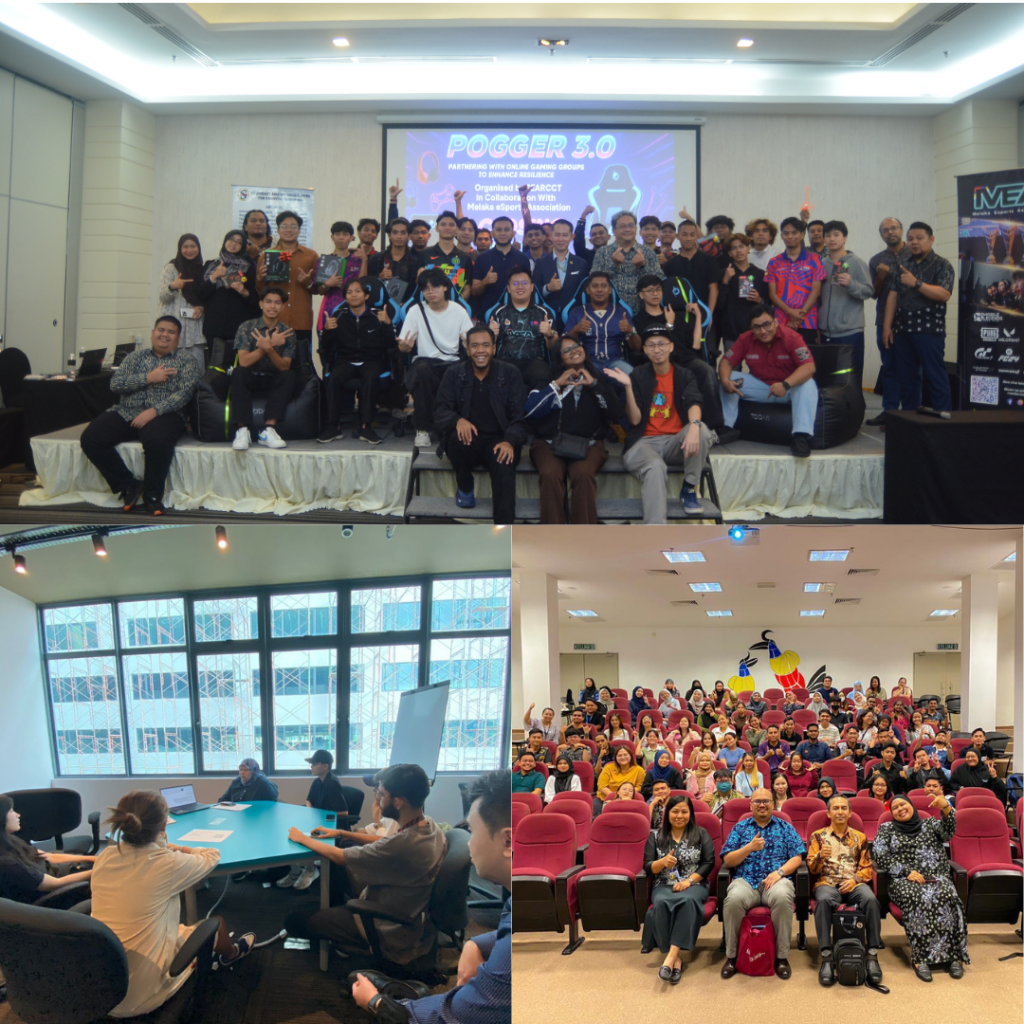
Ensuring an inclusive, holistic approach
Prevention in gaming spaces is not only about removing harmful content. It requires equipping gamers and communities with the skills and knowledge to respond effectively. Encouraging reporting as an act of community care is central to this process, but it depends on players’ trust that reports will lead to meaningful action. Game developers and platform providers must ensure that reporting tools are accessible, responsive and trusted. Transparency mechanisms such as Roblox’s Transparency Report, help make risks visible, demonstrate follow-through and build user confidence.
Malaysia’s Action Plan on Preventing and Countering Violent Extremism (MyPCVE) underscores early intervention, awareness and collaboration between communities and authorities. This reflects a shift toward bottom-up approaches that recognise communities as the first line of resilience. Complementing these efforts need a whole-of-government, multidisciplinary framework involving policymakers, PCVE practitioners, civil society organisations, industry players and gaming communities to bridge knowledge gaps and better equip young people with the skills to navigate online risks.
SEARCCT’s lessons learnt
SEARCCT’s experience highlights three key lessons learnt:
First, prevention efforts must invest in trust-based, community-led communication channels as streamers, moderators and community figures often hold greater credibility than formal institutions. Supporting these actors with skills and knowledge allows prevention messages to be delivered in ways that are authentic, relevant and more likely to resonate.
Second, reporting should be reframed as a collective act of community care. Recognising risks and responding productively helps disrupt harmful behaviours before they escalate.
Ultimately, effective prevention strategies focus on strengthening resilience. Building digital literacy, critical thinking skills and awareness of extremist narratives—supported by trusted moderation systems, community norms and positive role models—can interrupt pathways to radicalisation early. Prevention therefore depends not only on regulations, but on empowering communities to become key partners in PCVE within gaming spaces.