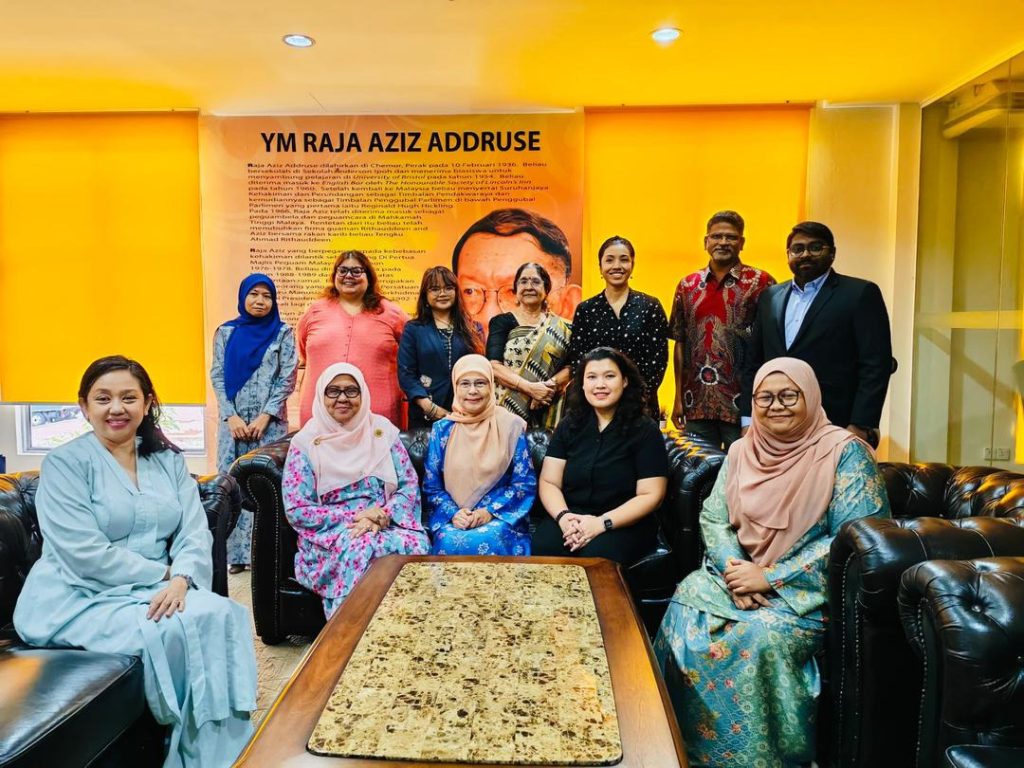

Bangi, 31 March 2026 – INITIATE.MY Project Officer, Balqis Maesara, participated in a civil society organisation (CSO) meeting on the Security Offences (Special Measures) Act 2012 (SOSMA) and legal aid for children, held at the Law Library of Universiti Kebangsaan Malaysia (UKM).
Tun Tengku Maimun, former Chief Justice of Malaysia and Holder of the Royal Chair on Governance and Integrity at UKM, attended the meeting alongside representatives from SUARAM, Mandiri, Buku Jalanan Chow Kit, Kemban Kolektif, the Human Rights Commission of Malaysia (SUHAKAM) and other CSO partners.
The meeting discussed the detention of children under SOSMA in youth radicalisation cases, where children may be denied protections under the Child Act and the Evidence Act. On 28th of January, INITIATE.MY, together with SUHAKAM and SUARAM, had issued a joint statement calling for children not to be processed under SOSMA, but through child-centred procedures and treatment. As a counter-extremism organisation, INITIATE.MY recognises child radicalisation as a serious concern, but believes responses must be carefully tailored to avoid counterproductive outcomes.
Participants noted that similar arrests continued in February following the January 2026 detentions, with documented concerns of child rights violations during detention. The group called for a moratorium on the use of SOSMA against children and stressed that the Child Act 2001 must apply regardless of the charge. As a signatory to the United Nations Convention on the Rights of the Child (CRC), Malaysia is expected to protect children throughout the criminal justice process.
Participants also raised concerns over the limited child rights components in police training. They highlighted community-based policing models in countries such as New Zealand, Timor-Leste, and Italy as more effective alternatives, particularly for engaging young people.
The group agreed that meaningful reform requires strong political will from the highest levels of government. Advocacy efforts should target senior decision-makers, including the Prime Minister’s Office and the Ministry of Home Affairs, by linking child rights obligations to Malaysia’s international commitments, government accountability, and political responsibility. Participants stressed that engagement alone is insufficient; sustained pressure from the top is needed to drive meaningful reform.